How Credit Score Estimates Differ From Actual Lender Assessments
Many people believe that the credit score they see on a personal dashboard is the exact same number a bank sees during a loan application. It is a common assumption that there is one single, universal number that defines a person’s financial health. However, the reality of credit reporting is much more complex and layered than a single digit might suggest.
When you check your standing using a digital tool, you are viewing an estimate based on specific data available at that moment. This estimate serves as a guide to help you understand your general creditworthiness. While it is a valuable resource for tracking progress, it does not always align perfectly with the rigorous assessment a lender performs behind closed doors.
This article explores the fundamental reasons why these discrepancies occur. By understanding the gap between a personal estimate and a professional evaluation, you can better prepare for your next major financial step. We will look at the different models, the timing of data updates, and the additional factors that lenders weigh when making a final decision.
The Purpose of a CIBIL Score Calculator
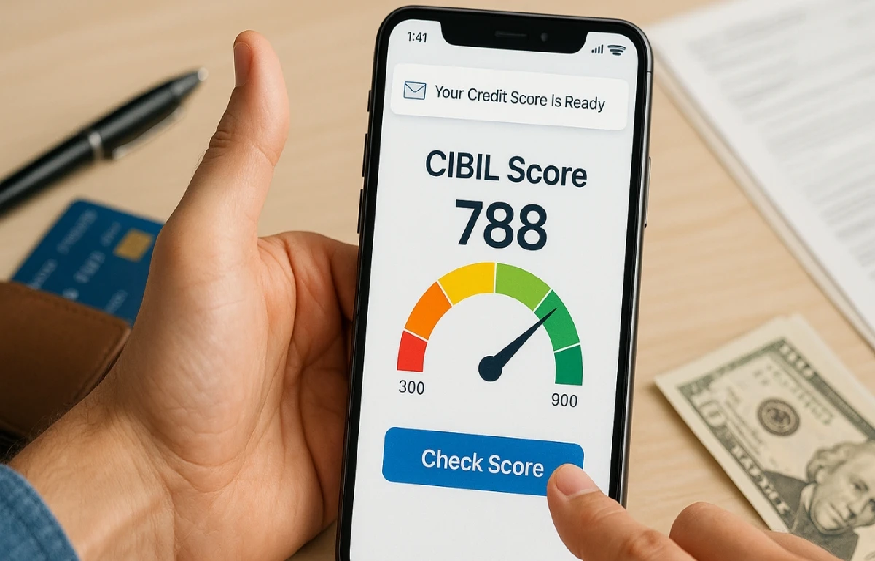
Many individuals start their financial journey by using a CIBIL score calculator to gauge their chances of getting a loan. These tools are designed to be user friendly and accessible. They take basic information about your payment history, credit utilization, and account age to produce a number that reflects your credit health. For the average consumer, this is an excellent way to monitor trends and identify potential errors in a credit report.
The primary goal of these calculators is education and monitoring. They provide a “soft” look at your data, which means the inquiry does not negatively impact your standing. Because they are built for consumers rather than for high stakes lending, they often use simplified algorithms. These algorithms are meant to give you a ballpark figure rather than a definitive guarantee of loan approval.
While a CIBIL score calculator is a powerful tool for self improvement, it is important to remember its limitations. It uses the data available to the public or the specific bureau providing the service. If a lender uses a different bureau or a more advanced version of the scoring model, the results will naturally vary. Using these tools should be seen as a way to stay informed rather than a way to predict a lender’s reaction with absolute certainty.
Understanding the Variety of Scoring Models
One of the biggest reasons for a discrepancy in scores is the sheer variety of scoring models in existence. Even within a single credit bureau, there are multiple versions of a scoring algorithm. For example, a model used for a credit card application might place a higher weight on your history of revolving credit. Conversely, a model used for a mortgage might focus more on your long term debt stability and previous home loan history.
Lenders often pay for specialized versions of a CIBIL score that are tailored to their specific industry. These industry specific models are not usually available to the general public through free estimation tools. A bank might be using a version of the software that was released several years ago because it has proven to be a reliable predictor of risk for their specific customer base. Meanwhile, the estimate you see online might be using the very latest version of the algorithm.
Furthermore, different financial institutions have different appetites for risk. One lender might view a score of 750 as excellent, while another might have stricter internal requirements that demand a 780 for the best interest rates. This variation means that the “score” is not just a number, but a piece of data that is interpreted through the lens of a lender’s unique business strategy.
Why Lenders Look Beyond the Three Digits
A credit score is a significant part of a loan application, but it is rarely the only factor. Lenders perform a holistic review of an applicant’s financial life. They look at your debt to income ratio, which is a calculation of how much of your monthly income goes toward paying off existing debts. Even if you have a high CIBIL score, a lender might reject your application if they feel your current income cannot support another monthly payment.
Employment stability is another critical factor that a standard CIBIL score does not capture. A lender wants to see that you have a steady source of income to repay the debt. They may ask for salary slips, tax returns, and bank statements to verify your financial position. A personal credit estimate does not have access to your bank balance or your employment history, so it cannot account for these variables.
Lenders also look at the “mix” of credit you have. They prefer to see a healthy balance of secured loans, like a car loan or mortgage, and unsecured loans, like credit cards. If your credit history consists entirely of high interest personal loans, a lender might view you as a higher risk, even if your numerical score is decent. This qualitative analysis is something a simple calculator cannot replicate.
How to Interpret Your Personal Credit Estimates
Given the potential for differences, you might wonder if personal estimates are worth checking at all. The answer is a resounding yes. While the number might not be an exact match to what a lender sees, the direction of the score is highly accurate. If your estimate is going up, it means your financial habits are improving. If it is dropping, it is a signal that you need to investigate your recent activity.
Use your personal estimate as a diagnostic tool. It allows you to check for errors, such as accounts that do not belong to you or payments that were incorrectly marked as late. Correcting these errors on your own time is much easier than trying to fix them while a loan application is pending. Think of the estimate as a weather forecast. It tells you the general conditions, but the actual experience on the ground might vary slightly.
When you use a CIBIL score calculator, focus on the factors influencing the number rather than just the number itself. Look at your credit utilization ratio and your payment history. These are the core pillars that every lender will examine. If these fundamentals are strong, the minor differences between scoring models will likely not be the deciding factor in your loan approval.
Preparing for a Professional Credit Review
To bridge the gap between an estimate and a lender’s assessment, you should take a proactive approach to your finances. Start by checking your credit report at least six months before you plan to apply for a major loan. This gives you enough time to dispute any inaccuracies and allow your score to recover from any recent hard inquiries.
Avoid opening new credit accounts or making large purchases on credit right before a loan application. This keeps your credit utilization low and prevents unnecessary hard inquiries from appearing on your report. Consistency is what lenders value most. They want to see a long history of responsible behavior rather than a sudden burst of activity.
Finally, remember that communication with your lender is key. If you know there is a discrepancy or a specific reason for a dip in your score, be prepared to explain it. Lenders are often willing to listen to context, especially if you have a strong income and a long relationship with the institution. By understanding that your CIBIL score is just one part of a larger puzzle, you can approach the lending process with confidence and clarity.